We remodeled the downstairs of the house several years ago. Two rooms had walls moved to make way for additional rooms. Deep construction. Months of noise, plastic tarps, dust, and decisions.
When they start applying the drywall, it starts to look like your house again, and you begin to hope for dustless silence. Drywall is when you start wondering, “Are they going to fix that?” Defects. Partly completed work. Small dents. Dings. As you start to finish, you can see everything that is not quite right.
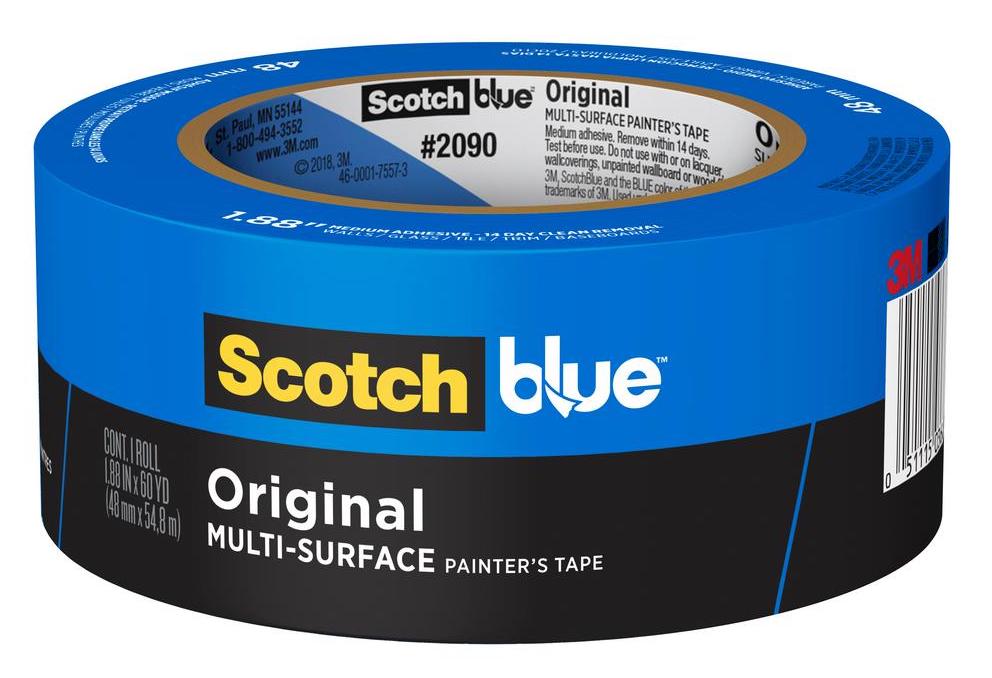
When we started to ask our general contractor these questions, he whipped out a roll of blue painter’s tape1 and gave us the following instructions:
- You are going to see everything that is wrong with our work from now until we’re done. That’s fine.
- When you see something that needs attention, mark it with this blue tape.
- We will fix everything that has the blue tape.
Everything is Broken
Our ability to see imperfections after significant context switches is impressive. A new home or remodel, a new car, and a new job. When the context around you changes massively, your brain moves to high alert. Everything is different. Pay close attention. Something important is up.
Why? I used to think it was about significant expenditures; it was making sure I was getting my money’s worth, or perhaps it was an unrealistic desire to keep what is new in perfect condition. That makes sense for big-ticket items, but why do I have the same heightened things-have-changed and this-is-wrong detection abilities with a new job?
Ninety days is how long I believe it takes to understand a new job – a one month honeymoon followed by the one month dip of despair where the shine comes off the new job. It is during this second month where everything large and small that –is broken, odd, and weird about the new role will attempt to convince that you made a horrible choice with this new role.
Look at everything that is broken. I made a mistake.
Why is the reaction similar to a big purchase and a big job? It’s the change of context. I knew how the prior room felt; I knew how the previous car drove, and I understood how the previous job worked.
Having been through this experience many times, I’ve discovered that a simple fix is patience. In time, that which is different will feel normal. It’s why when a team member reports moderate concerns with a new hire that I gently always ask, “When did they start?” If the answer is less than two months, I suggest, “If it’s not heinous behavior, give it another month. They’re still adapting to a new environment, and we don’t know who they are.”
That might be good advice for a manager with a new direct report, but when you’re the direct report, when you’re in the middle of the second month, and it all feels broken, “just a wait a bit longer” is unhelpful advice. It’s also bad advice.
You need blue tape.
A Spectrum to the Broken
There is value to your mutant ability to detect change in a new environment. You have a heightened ability to detect differences, but which differences are essential versus just different?
Your mutant difference detection ability doesn’t efficiently categorize the severity of differences. That ding on the new basement door? Feels important, right? Ok, look at any other existing door in the house and count the old dings that you no longer see. The fact your new team doesn’t have a staff meeting? Feels essential, too, but what are the other ways the team is communicating? You probably don’t know yet, because you haven’t experienced them.
There is a telltale discomfort that accompanies the understanding of a new context, and I believe that discomfort is a blessing and a curse. The ability to see what is different, unfamiliar, or broken is a blessing. When I speak at new hire orientation, I tell the room, “You’re lucky. There is lots to fix here, and we’re so busy we’ve become dull to the brokenness. Your homework over the next month is to send me one observation of a broken thing. I’ll address it.”
That’s my advice for you. The moment your alarms bells go off in the new role, start blue taping everything. Write it down. Send yourself a mail. However, you keep track of the things. Make a visible note that you can clearly see. Don’t attempt to fix items on this list, yet, because you don’t have a useful prioritization function, yet. It’s coming.
Context Comes with Time
My contractor fixed everything that we marked with blue tape. It was immensely satisfying knowing that whenever my wife or I blue taped something that it’d be fixed. In a job context, I have a modified and simplified version of my contractor’s blue tape advice:
- In a new context, you’re going to notice everything that feels off.
- Make a list of everything that feels off, no matter how big or small.
- Wait a bit, like a month, but address everything.
You will notice my homework to new hires did not commit to fixing everything they saw, I committed to addressing it. This could mean fixing the issue, but it could also mean responding and clearly explaining my reasoning why I didn’t think fixing the issue was the right move.
It’s a surprise when a month passes, and you review your blue tape list and discover how items that seemed urgent at the time now seem entirely irrelevant. You are learning so much every single minute of a new gig; you are gathering so much context. You are continually updating your understanding, your context of the team, your role, and the company. Your understanding after three months of work isn’t remotely complete, but it is exponentially more complete than at the end of month two.
You still address every item on the blue tape list. Every item gets a response. If you’re planning on fixing the issue, explain how and when. If you’re not planning on fixing it, explain why. If you still aren’t sure about relative importance, think about how you might find it.
A large new context is uncomfortable. It’s an emotional time because that which was daily familiar is now wholly foreign. The high alert your brain defaults to is stressful, but it’s a lens that allows you to see defects the old guard can no longer see.
All you need is a little blue tape.
- Yes, the tape is mostly a metaphor in this article, but if you are working on your home, this specific type of tape is excellent. It’s colorful so no one can miss it, and it sticks ever so lightly, which means nothing damaged on removal. I ❤️ this tape. ↩
 Sye van der Veen
  Nikhil
  Paul Cutting
9 Responses